Roof Leak Repair in Owasso, OK
Water stain on the ceiling? The leak you see is almost never directly under the hole in the roof. Our leak-tracing specialists find the actual entry point — then fix the source, not the symptom.
Roof leak repair in Owasso, OK starts with a truth most homeowners learn the expensive way: water travels. It enters at a failed pipe boot near the ridge, runs down the underlayment, follows a rafter, and drips onto your ceiling ten feet from the actual hole — sometimes in a different room. Owasso Roofing Pros traces leaks to their source instead of caulking the stain's neighborhood and hoping. The fix that lasts is the one applied at the entry point, with the water path repaired behind it.
Leaks are also the repair where speed compounds. A slow drip saturates insulation (which then can't insulate), softens OSB decking (which then can't hold fasteners), and feeds mold in the dark of the attic. What starts as a $300 boot replacement becomes a $1,500 leak-plus-decking job if it runs for a season. The stain on your ceiling is the roof's last warning, not its first.
Roof Leak Repair Services in Owasso — Detection, Pipe Boots, Flashing & Valleys
Every leak has a source type, and each type gets its own diagnostic discipline — because the wrong diagnosis is the most expensive part of any leak repair.
Leak Detection & Tracing
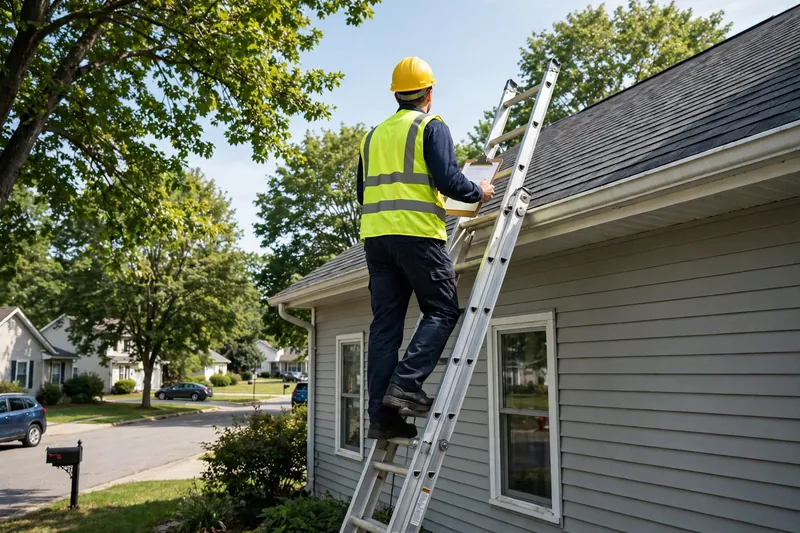
The service everything else depends on. The crew works from the interior stain outward and upward — attic inspection first (water marks on the decking underside, stained insulation, daylight at penetrations), then the roof surface above and upslope of the interior evidence. Hose testing isolates the entry when visual tracing isn't conclusive. You get the entry point photographed and explained before any repair scope is written, because a repair without a confirmed source is a guess with an invoice.
Pipe Boot Replacement
The single most common leak source on Owasso roofs. Rubber pipe boots crack from UV exposure in 7–12 years — faster on south-facing slopes — leaving a direct water path around every plumbing vent. Replacement means removing the surrounding shingles, installing a new boot (often upgraded to a longer-life material), re-flashing the base, and re-laying the courses. Most single-boot jobs finish in an hour or two.
Flashing Leak Repair
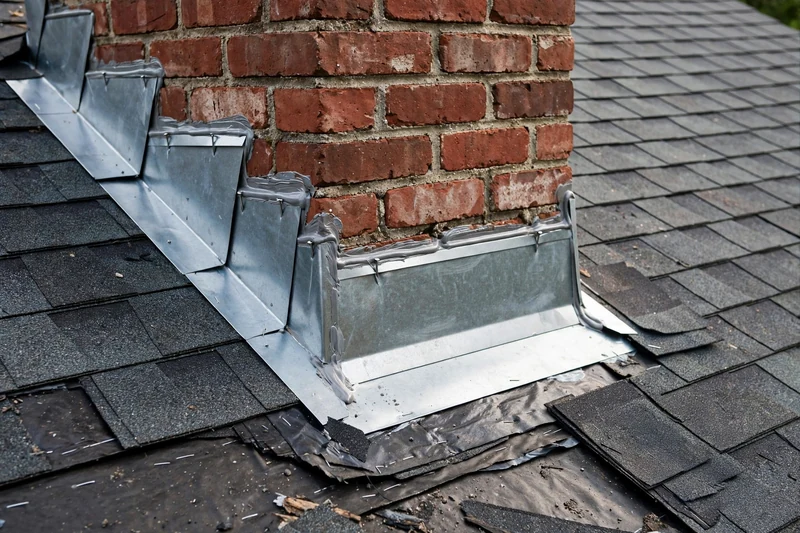
Chimney step flashing, valley flashing, and wall flashing are the leak sources that get misdiagnosed most often — because the failure is in the metal layering beneath the shingles, invisible from the surface. Crews remove the courses around the detail, replace fatigued metal, re-bed it in fresh sealant, and re-layer the shingles so water sheds over the flashing in the correct sequence. The sealant-smear shortcut — caulk over the top — is exactly what we're screening against.
Valley & Decking Water-Path Repair
When a leak has run long enough to saturate the path, the repair expands beyond the entry point: stained or soft decking gets cut out to the rafter line and replaced, wet insulation gets removed, and the underlayment gets renewed in the damage zone. The crew documents the water path with photos so you can see exactly how far the damage traveled — and exactly why the scope is what it is.
Where Do Owasso Roof Leaks Actually Come From?
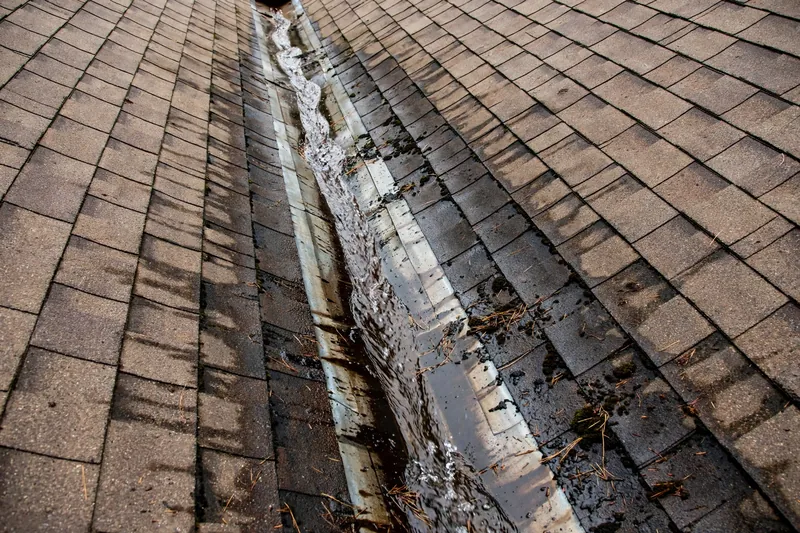
Owasso leaks cluster at penetrations and transitions — pipe boots first, then chimney and wall step flashing, then valleys — while the open field of shingles almost never leaks on its own. The attic tells the truth: staining on the decking underside records the water's history, separating active leaks from old stains. Here is each source in order of frequency:
Pipe Boots: The Usual Suspect
Every plumbing vent passes through the roof through a rubber boot, and UV cooks that rubber. The 7–12 year failure window means a 10-year-old roof is statistically due for boot failures whether or not the shingles show their age. The tell: a stain on the ceiling roughly below a bathroom or kitchen vent stack, often appearing after heavy rain but not light rain (volume matters — a cracked boot sheds drizzle and fails under flow). Because boots are cheap components with expensive consequences, a good inspection catalogs every penetration on the roof, not just the one that's leaking — one replaced boot next to two cracking ones just moves the leak to next season.
Step Flashing at Chimneys & Walls
Step flashing is thin metal woven between each shingle course where the roof meets a chimney or wall, with counter-flashing bedded into the masonry above it. The failure is almost always the counter-flashing separating from the masonry — a hairline gap invisible from the ground that drives rain inward behind the step flashing. These leaks are intermittent (wind-driven rain only) and maddening, which is why they get misdiagnosed as "mystery leaks" by handymen with caulk guns. The real fix is masonry-level work: re-bedding the counter-flashing, not surface sealant.
Valleys: Maximum Water, Minimum Forgiveness
Valleys carry the heaviest water flow on the entire roof — two slopes draining into one channel. A pinhole in valley flashing, a lifted valley shingle, or debris damming the channel all leak under volume: the roof that's fine in a drizzle fails in a spring downpour. Valley leaks also travel far, following the valley line down-slope before finding an interior path, which is why the stain can sit rooms away from the valley itself.
The Attic Tells the Truth
This is why every leak inspection includes the attic. The underside of the decking records water history the roof surface hides: dark staining along rafters, delaminating OSB, rusted nail heads weeping brown trails, insulation matted flat where it's been wet. An attic reading distinguishes an active leak (damp, fresh staining) from an old one (dry, dark, historic) — and that distinction decides whether you're repairing a current failure or documenting a past one for the record. If your attic access is buried behind storage, clear a path before the inspector arrives; the attic is where the diagnosis happens.
How Much Does Roof Leak Repair Cost in Owasso?
A single-source leak repair in Owasso runs $200–$1,500, with most jobs landing $300–$1,100; extensive or long-running leaks with decking damage run up to $3,000. Pipe boot replacement sits $250–$600 and flashing repairs $150–$600. The dominant variable is what the water damaged on its way in. These are market estimates — the free inspection gives the exact number.
| Repair type | Typical range | What drives the price |
|---|---|---|
| Roof leak repair (single source) | $200–$1,500; most jobs $300–$1,100 | Leak source complexity, accessibility, number of courses disturbed |
| Extensive leak repair (multiple sources / long-running) | Up to $3,000 | Multiple entry points, saturated decking, insulation replacement |
| Pipe boot replacement | $250–$600 | Number of boots, roof pitch, shingle re-laying around each |
| Flashing repair (chimney/valley/wall) | $150–$600 | Linear feet of flashing, masonry condition, courses to remove and re-lay |
| Partial re-decking (water-damaged sheathing) | $300–$2,500 | Square footage of decking replaced, rafter involvement |
Typical ranges based on national industry data — every roof is different. Your free inspection gives you the exact number, itemized. These are market estimates, not our price list.
The range that matters most is the jump from "$300–$1,100" to "up to $3,000": that's the cost of time. A leak caught at the stain stage is a source repair; a leak caught at the sagging-decking stage is a source repair plus decking plus insulation. The inspection is free; the delay is what invoices.
Our Leak Repair Process
- Interior containment guidance. If water is actively coming in, the triage call walks you through buckets, furniture protection, and power safety before anyone climbs a ladder. Active intrusion may need emergency tarping first.
- Attic-first inspection. The crew reads the decking underside for water history — active vs. historic staining, the high-water mark of the leak's travel — then moves to the roof surface upslope of the evidence.
- Source confirmation. The entry point gets photographed and explained to you before any scope is written. If visual tracing isn't conclusive, hose testing isolates it. No confirmed source, no invoice — that's the rule.
- Source repair plus water-path repair. The failed component gets fixed properly (new boot, re-bedded flashing, replaced valley metal), and everything the water damaged on its way in — decking, underlayment, insulation — gets repaired or replaced in the damage zone.
- Verification and documentation. After photos of the repair and the dried-out path, the invoice itemized against the scope, and — for storm-caused leaks — documentation built for your adjuster. See our roof repair in Owasso page for the broader repair picture.
Why Choose Owasso Roofing Pros for Leak Repair
- Source-first, always. Our crews confirm the entry point before writing scope — because the most expensive leak repair is the one that fixes the wrong thing and has to be done twice.
- Attic-included inspections. A surface-only leak inspection is half a diagnosis. Ours start under the deck, where the water history is written, and the photos you keep include the attic evidence.
- Storm-leak documentation. When the leak traces to wind or hail, the inspection report carries the storm date and close-up failure photos your adjuster needs. Leak plus storm history is a claim; leak without it is a maintenance bill.
- Free, no-pressure, honest about scope. If the "leak" is condensation, a plumbing issue, or an old stain from a long-fixed problem, we'll say so. At Owasso Roofing Pros you'll meet repair specialists — not invoices looking for a justification. For a dedicated deep-dive on roof condition, see our roof inspection in Owasso page.
Roof Leak FAQs
Market estimates: $200–$1,500 for a single-source leak repair, with most jobs landing $300–$1,100; extensive or long-running leaks with decking damage run up to $3,000. Pipe boot replacement sits $250–$600, flashing repairs $150–$600. The dominant variable is what the water damaged on its way in — a fresh leak is a source repair, an old leak is a source repair plus decking. These are market estimates, not our price list; the free inspection gives you the exact, itemized number.
Because water travels. It enters at the failed component — a cracked boot, a separated flashing — then runs down the underlayment, follows rafters or the decking slope, and drips through the ceiling at the lowest convenient point, often rooms away from the entry. That's why leak repair starts with tracing, not caulking: the crew works from the interior stain upward and upslope, confirms the entry point with photos (and hose testing if needed), and fixes the source — plus everything the water damaged along its path.
It depends on what caused it. Leaks from wind or hail damage are typically covered perils — subject to your deductible (commonly 1–5% of insured value for wind/hail in Oklahoma), replacement-cost vs. actual-cash-value terms, and cosmetic-damage exclusions. Leaks from age and wear — a 12-year-old boot cracking on schedule — generally aren't. The inspection distinguishes the two with dated evidence, which is exactly what the adjuster needs. Our Oklahoma roof insurance claims guide covers the process and what to do if a claim is denied.
Most single-source leaks are resolved in one visit — a boot replacement runs an hour or two, flashing repairs typically half a day. Leaks with water-path damage (decking, insulation) can run a full day. The inspection itself takes 45 minutes to an hour, attic included. Scheduling usually runs one to five business days out. Active intrusion right now is an emergency, not a scheduling question — see our emergency roof repair and tarping page.
Paint covers the symptom and hides the evidence — the worst of both worlds. The stain means water got in; paint doesn't stop the next rain from following the same path, and it destroys the visual record an inspector (or adjuster) uses to trace the leak's history and severity. Fix the source first, let the path dry completely, then repaint. Sealing a stain with paint while the leak is active is how a $300 repair becomes a $1,500 decking job.
Ask the inspector to grade all of them. Rubber boots fail on a 7–12 year UV clock, so on a 10-year-old roof the non-leaking boots are usually on the same schedule — replacing them in one visit costs far less per boot than three separate service calls over two years. That said, "replace everything" isn't automatic: boots in shaded, north-facing positions age slower. The honest answer is per-boot, photographed, and priced as options — not a bundle pushed as a package.
Find the Source Before the Next Rain Finds It
A stain is the roof's last warning. A free inspection traces your leak to its actual entry point — attic to ridge — with photos you keep and an itemized fix. No tracing, no guesswork, no caulk-and-pray.
Free leak-tracing inspection · No-pressure · Photos of everything we find